News and Announcements

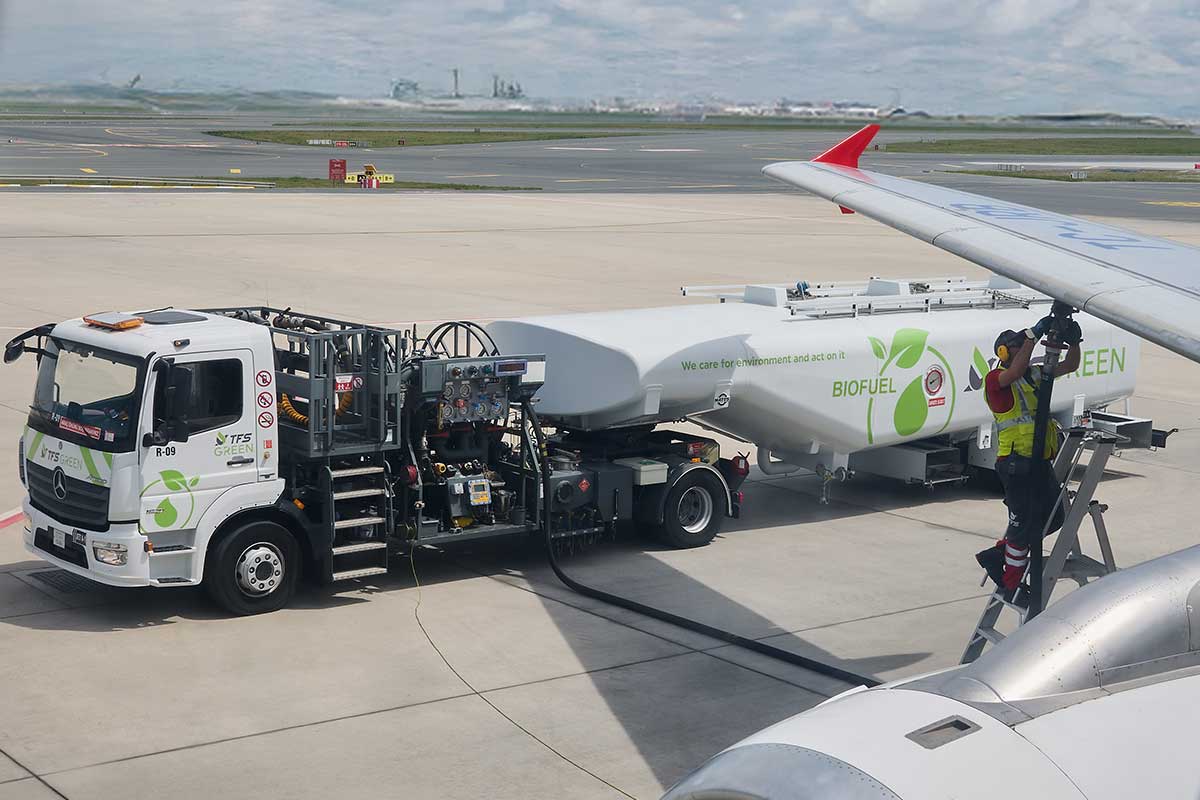
Istanbul Airport fuel infrastructure is designed with an advanced refueling system to seamlessly handle high flight traffic.

Why did Istanbul Airport’s fuel infrastructure have to be one of the largest in the world?

For airports positioned as global hubs, fuel infrastructure is a strategic system that enables operational continuity and determines airport capacity. The primary reason Istanbul Airport’s fuel infrastructure ranks among the largest in the world is to ensure the capacity to seamlessly manage the simultaneous operational demands generated by high traffic volumes.

Istanbul Airport handles an average of nearly 1,500 aircraft movements per day; in 2025, it served approximately 84 million passengers and facilitated 547,000 aircraft movements. From an operational standpoint, the real challenge lies not in the total number of flights, but in the concentration of this traffic during specific times of the day.

As a global hub, Istanbul Airport sees a large number of aircraft converging on the same apron within short timeframes. While passengers make connections, both narrow-body and wide-body aircraft prepare for their next flights and undergo simultaneous refueling. Any capacity constraint within the fuel infrastructure could directly impact apron utilization, aircraft turnaround times, slot scheduling, and the continuity of the flight network. Consequently, the infrastructure was planned with the scale and flexibility to accommodate not only current operations but also increasing operational volumes, fuel demand, and long-term growth projections.

This system offers a significant capacity reserve for future growth, featuring an existing storage capacity of 300,000 m³ and an approved storage capacity of 480,000 m³. Its port—capable of accommodating vessels up to 125,000 DWT—along with an 81-kilometer pipeline, 522 hydrant refueling points, and a hydrant network capable of simultaneously refueling 62 aircraft, provides the refueling capacity required for the world’s busiest hub operations. This infrastructure safely and seamlessly supports the refueling operations of the more than 100 airlines flying to and from Istanbul Airport.

The global scale of Istanbul Airport’s operations means that a significant portion of Türkiye’s total jet fuel consumption takes place at this hub. Today, TFS manages a volume equivalent to approximately 50% of Türkiye’s total jet fuel consumption through this infrastructure.

News and Announcements

Istanbul Airport fuel infrastructure is designed with an advanced refueling system to seamlessly handle high flight traffic.

Why did Istanbul Airport’s fuel infrastructure have to be one of the largest in the world?

For airports positioned as global hubs, fuel infrastructure is a strategic system that enables operational continuity and determines airport capacity. The primary reason Istanbul Airport’s fuel infrastructure ranks among the largest in the world is to ensure the capacity to seamlessly manage the simultaneous operational demands generated by high traffic volumes.

Istanbul Airport handles an average of nearly 1,500 aircraft movements per day; in 2025, it served approximately 84 million passengers and facilitated 547,000 aircraft movements. From an operational standpoint, the real challenge lies not in the total number of flights, but in the concentration of this traffic during specific times of the day.

As a global hub, Istanbul Airport sees a large number of aircraft converging on the same apron within short timeframes. While passengers make connections, both narrow-body and wide-body aircraft prepare for their next flights and undergo simultaneous refueling. Any capacity constraint within the fuel infrastructure could directly impact apron utilization, aircraft turnaround times, slot scheduling, and the continuity of the flight network. Consequently, the infrastructure was planned with the scale and flexibility to accommodate not only current operations but also increasing operational volumes, fuel demand, and long-term growth projections.

This system offers a significant capacity reserve for future growth, featuring an existing storage capacity of 300,000 m³ and an approved storage capacity of 480,000 m³. Its port—capable of accommodating vessels up to 125,000 DWT—along with an 81-kilometer pipeline, 522 hydrant refueling points, and a hydrant network capable of simultaneously refueling 62 aircraft, provides the refueling capacity required for the world’s busiest hub operations. This infrastructure safely and seamlessly supports the refueling operations of the more than 100 airlines flying to and from Istanbul Airport.

The global scale of Istanbul Airport’s operations means that a significant portion of Türkiye’s total jet fuel consumption takes place at this hub. Today, TFS manages a volume equivalent to approximately 50% of Türkiye’s total jet fuel consumption through this infrastructure.

News and Announcements

Istanbul Airport fuel infrastructure is designed with an advanced refueling system to seamlessly handle high flight traffic.

Why did Istanbul Airport’s fuel infrastructure have to be one of the largest in the world?

For airports positioned as global hubs, fuel infrastructure is a strategic system that enables operational continuity and determines airport capacity. The primary reason Istanbul Airport’s fuel infrastructure ranks among the largest in the world is to ensure the capacity to seamlessly manage the simultaneous operational demands generated by high traffic volumes.

Istanbul Airport handles an average of nearly 1,500 aircraft movements per day; in 2025, it served approximately 84 million passengers and facilitated 547,000 aircraft movements. From an operational standpoint, the real challenge lies not in the total number of flights, but in the concentration of this traffic during specific times of the day.

As a global hub, Istanbul Airport sees a large number of aircraft converging on the same apron within short timeframes. While passengers make connections, both narrow-body and wide-body aircraft prepare for their next flights and undergo simultaneous refueling. Any capacity constraint within the fuel infrastructure could directly impact apron utilization, aircraft turnaround times, slot scheduling, and the continuity of the flight network. Consequently, the infrastructure was planned with the scale and flexibility to accommodate not only current operations but also increasing operational volumes, fuel demand, and long-term growth projections.

This system offers a significant capacity reserve for future growth, featuring an existing storage capacity of 300,000 m³ and an approved storage capacity of 480,000 m³. Its port—capable of accommodating vessels up to 125,000 DWT—along with an 81-kilometer pipeline, 522 hydrant refueling points, and a hydrant network capable of simultaneously refueling 62 aircraft, provides the refueling capacity required for the world’s busiest hub operations. This infrastructure safely and seamlessly supports the refueling operations of the more than 100 airlines flying to and from Istanbul Airport.

The global scale of Istanbul Airport’s operations means that a significant portion of Türkiye’s total jet fuel consumption takes place at this hub. Today, TFS manages a volume equivalent to approximately 50% of Türkiye’s total jet fuel consumption through this infrastructure.

Privacy Overview

This website uses cookies to provide you with the best possible user experience. Cookie information is stored in your browser and serves functions such as recognizing you when you return to our website and helping our team understand which parts of the website you find most interesting and useful.

Strictly Necessary Cookies

Strictly Necessary Cookie should be enabled at all times so that we can save your preferences for cookie settings.

Analytics

This website uses Google Analytics to collect anonymous information such as the number of visitors to the site, and the most popular pages.

Keeping this cookie enabled helps us to improve our website.

Marketing

This website uses the following additional cookies:

(List the cookies that you are using on the website here.)